🐈 Scottish Fold
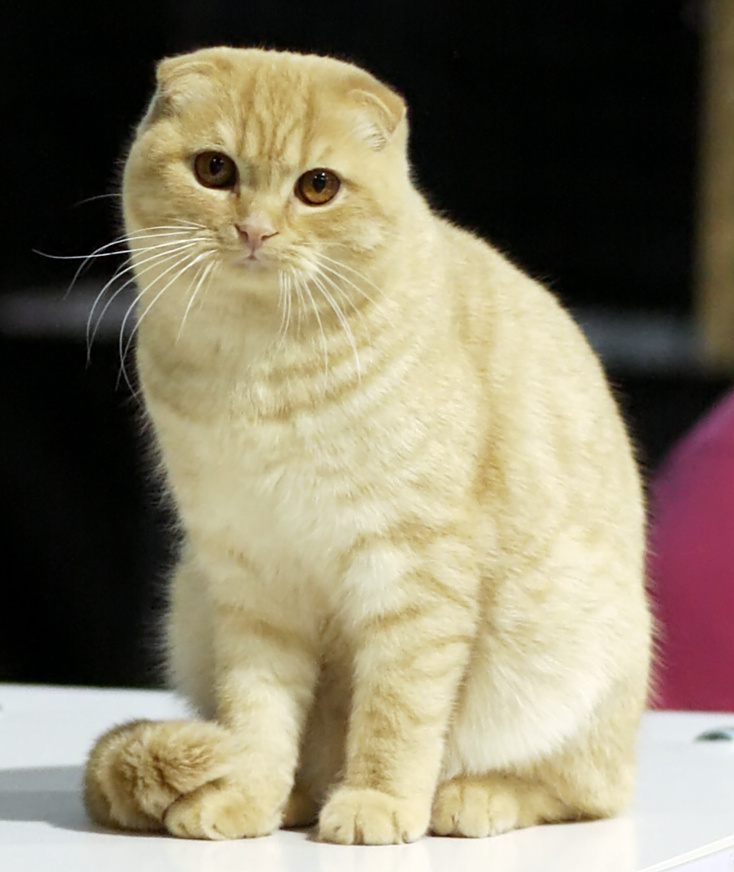
📊Overview
Known for folded ears and a round, owl-like face, this sweet, mellow cat bonds closely with its people. The same gene that folds the ears causes painful degenerative cartilage and joint disease (osteochondrodysplasia) in the breed.
⚡Ownership snapshot
👍 Pros
- Very sweet, calm, and affectionate family cat
- Quiet, soft-voiced, and adaptable to apartments
- Gets along well with children and other pets
- Charming folded ears and iconic relaxed 'Buddha' pose
👎 Cons
- The fold gene causes cartilage/joint disease in all folds
- Prone to painful arthritis; may need lifelong care
- Folded ears need regular cleaning to avoid wax buildup
- Ethical/legal breeding concerns; restricted in some countries
🧭Temperament & needs
🧠Personality & temperament
Scottish Folds are sweet-natured, mellow, and deeply people-oriented, forming strong bonds and often striking their famous relaxed 'Buddha' sitting pose. They are moderately playful but calm (energy 3/5), quiet and soft-voiced (noise 2/5), and adapt happily to families, seniors, and other pets thanks to their easygoing, undemanding temperament.
📜Origin & background
The breed began in 1961 with a white barn cat named Susie, found with unusual folded ears on a farm in Tayside, Scotland, whose kittens were developed into the breed. Because the same gene affects cartilage throughout the body, careful outcrossing (notably to British Shorthairs) shaped the breed we know today.
🏃Exercise & enrichment
With moderate energy, a Scottish Fold enjoys daily play sessions, feather wands, and a few toys, but is just as content lounging beside you afterward. Gentle, regular activity is especially valuable because it helps keep their joints mobile and their weight in check.
✂️Grooming & hygiene
The short-to-medium double coat sheds moderately (shedding 3/5, grooming 3/5) and does well with brushing once or twice a week to remove loose hair and prevent mats in longhaired ('Highland') variants. Their folded ears trap wax and debris more easily, so gentle, regular ear checks and cleaning are important.
🍽️Diet & feeding
Feed a balanced, high-quality cat food in measured portions, typically twice a day, keeping calories in check since extra weight puts painful strain on their already-vulnerable joints. Formulas with joint-supporting nutrients (omega-3s, glucosamine) can be beneficial, ideally under veterinary guidance.
🏠Housing & environment
Scottish Folds suit almost any indoor home and are calm enough for apartments (space 3/5), appreciating soft resting spots, low-entry litter boxes, and easy-access perches that don't demand big jumps. Because of their joint sensitivity, avoid setups that force repeated high leaps and provide steps or ramps to favorite spots.
🩺Health & lifespan
The gene that folds the ears also causes osteochondrodysplasia — an abnormality of bone and cartilage that leads to painful arthritis — and to some degree it affects every folded-ear cat, which is why breeding two folded cats together is prohibited and ethical breeders always pair a fold with a straight-eared cat. Signs include stiff or thickened tails, reluctance to jump, and joint swelling; lifelong monitoring and pain management may be needed, though many single-fold cats live full, happy lives of about 11–15 years. Prospective owners should be aware this is a well-documented welfare concern and that several countries restrict the breed's breeding.
🎓Training & socialization
Gentle and reasonably clever, Scottish Folds respond to positive-reinforcement training and enjoy learning simple tricks, though they are less driven than some breeds (trainable 3/5). Keep sessions short, reward-based, and avoid anything that stresses their joints.
💰Cost of ownership
Purchase price is moderate to high depending on ear-fold quality and pedigree, and ongoing costs (cost 3/5) are average for food and grooming — but you should budget for potential joint-related veterinary care, imaging, and long-term pain management. Choosing a responsible breeder who only pairs fold-to-straight is the single best investment in avoiding severe, costly health problems.
💚Who it's good for
Gentle households wanting a calm, affectionate companion, ideally with awareness of the breed's joint-health ethics.
❓Frequently asked questions
Are Scottish Folds always in pain?
Not always, but every folded-ear cat carries some degree of the cartilage defect. Cats with one copy of the gene often live comfortably for years, while those from two folded parents can suffer severe, early arthritis — which is why fold-to-fold breeding is considered unethical.
Why are some Scottish Folds born with straight ears?
Yes — responsible breeders pair a folded cat with a straight-eared one, so a litter contains both fold and straight-eared kittens. The straight-eared cats (sometimes called 'Scottish Straights') don't have folded ears but are essential, healthier breeding partners.
How can I tell if my Fold has joint problems?
Watch for a stiff or thickened, less-flexible tail, reluctance to jump or run, an abnormal gait, or swollen joints. If you notice any of these, see a vet — X-rays can assess the condition and pain management can greatly improve quality of life.
🔎People also ask
Similar pets


Similar pets from other species


Sources: American Kennel Club / breed standards · The Cat Fanciers' Association · PDSA / RSPCA pet care guides · Spruce Pets care references