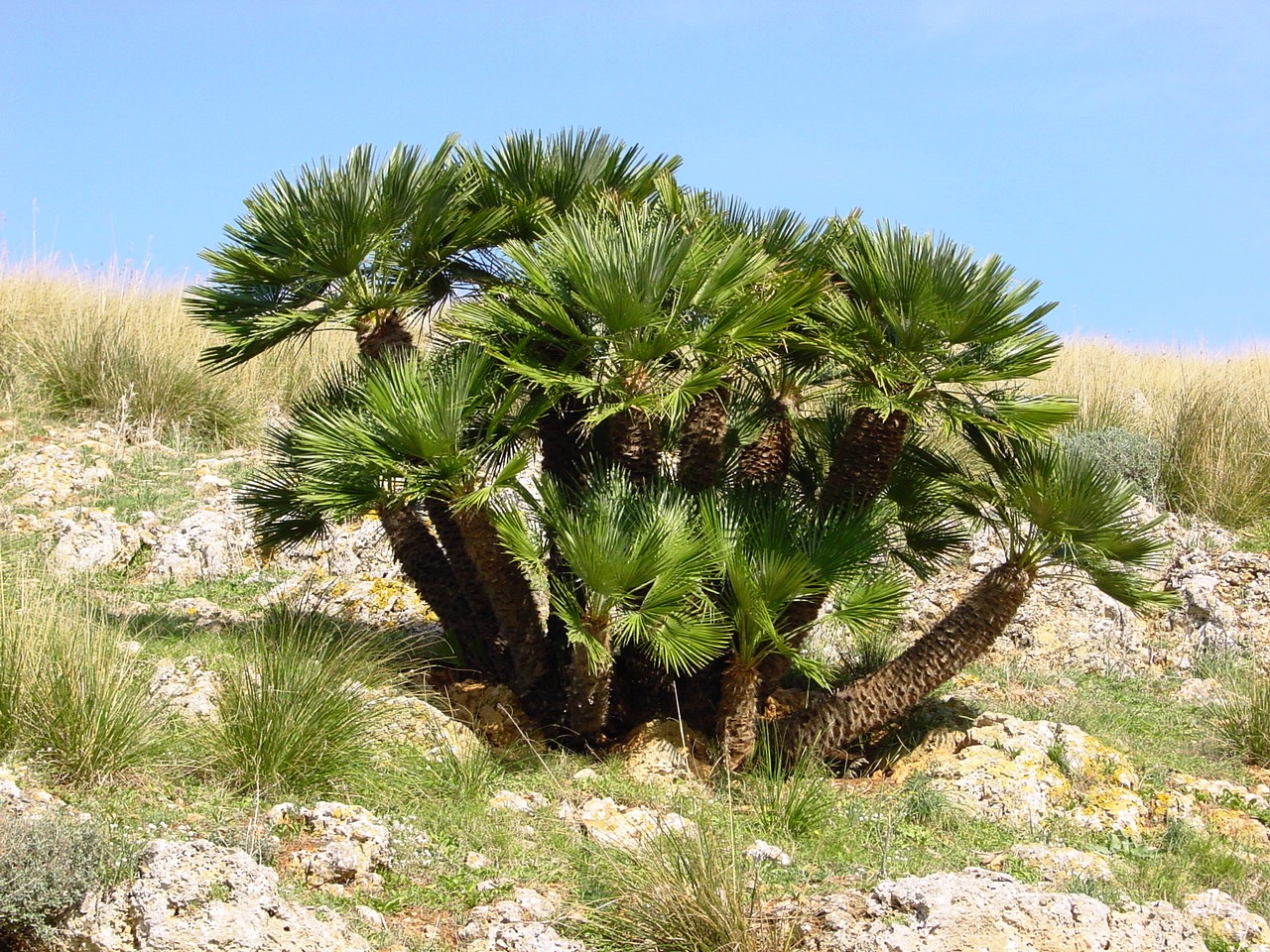
 Photo: tato grasso / CC BY-SA 2.5
European Fan Palm Care
Chamaerops humilis · Arecaceae
🐾 Pet-safe
🎯 Easy
☀️ Full sun
💧 Every 8–16 days
Photo: tato grasso / CC BY-SA 2.5Chamaerops humilis · Arecaceae
The European Fan Palm (Chamaerops humilis) is a popular houseplant from the Arecaceae family, native to Mediterranean. It is rated Easy to grow and typically reaches 90–200 cm indoors. Here is everything you need to keep it healthy — watering, light, humidity, feeding, propagation, and pet safety. It is a Slow grower, putting on most of its growth in the warm, bright months of spring and summer.
| Growth rate | Slow |
|---|---|
| Mature size | 90–200 cm (35–79 in) |
| Native region | Mediterranean |
| Plant family | Arecaceae |
| Toxicity | Non-toxic |
| Air-purifying | No |
| Ideal for | beginners, homes with pets, frequent travellers |
Water your European Fan Palm roughly every 8–16 days, letting the top few centimetres of soil dry out between waterings. Always empty the saucer so the roots never sit in water — overwatering is the most common way this plant is lost.
Not sure when to water? Push a finger 2–3 cm into the soil and water only when it feels dry at that depth — a cheap moisture meter or the weight of the pot works too. Water thoroughly until it runs from the drainage holes, then tip away anything left in the saucer. Soft, yellowing lower leaves usually mean too much water; crispy, curling leaves usually mean too little. Always ease off in the darker months, when the plant drinks far less.
The European Fan Palm thrives in full sun and needs as much direct light as you can give it indoors.
Give it your sunniest south-facing sill — the more direct light indoors, the better the colour and shape. Too little light makes it stretch and lose its compact form. Move plants outside for summer only after hardening them off gradually.
Keep it between 10–30 °C and away from cold draughts and heating vents. It prefers Low humidity; if your air is dry, group it with other plants or use a humidifier.
Plant it in standard well-draining potting mix. Feed with a diluted balanced feed monthly in spring and summer, and stop feeding in autumn and winter when growth slows.
| Season | Watering | What to do |
|---|---|---|
| Spring (Mar–May) | Resume regular watering as growth restarts. | The main growing season begins — start feeding again, repot if it is pot-bound, and take cuttings now for the best success. |
| Summer (Jun–Aug) | This is the thirstiest season; check the soil more often. | Keep feeding on schedule, watch for pests in the warmth, and shield the leaves from scorching midday glass. Higher humidity is welcome. |
| Autumn (Sep–Nov) | Let the soil dry a little longer between waterings. | Taper off feeding as growth slows, and move the plant away from cold windows and doorways before the first chills. |
| Winter (Dec–Feb) | Water sparingly — overwatering now is the number-one killer. | Stop feeding, give it the brightest spot you have, and keep it away from radiators, heat vents, and cold draughts. |
Repot roughly every 2–3 years, ideally in spring as growth picks up. Move up just one pot size (2–3 cm wider) with drainage holes — too big a pot holds water and invites root rot. Signs it is time: roots creeping from the drainage holes or circling the surface, water running straight through, or growth that has stalled. In the years you do not repot, scrape off and replace the top few centimetres of soil.
Spring and early summer, during active growth, give the best success. Here is how to do it, step by step:
| Plant type | Palm |
|---|---|
| Genus | Chamaerops |
| Family | Arecaceae · Arecaceae |
| Native to | Mediterranean |
| Symptom | Likely cause | What to do |
|---|---|---|
| Brown, crispy tips | Dry air, or salts and fluoride from tap water | Raise humidity and water with filtered or rested water. |
| Yellowing leaves | Usually overwatering or poor drainage | Let the soil dry more between waterings and make sure the pot drains. |
| Pests (mites, mealybugs) | Dry conditions or a new infected plant | Wipe the leaves, rinse, and treat with insecticidal soap or neem. |
The usual indoor pests are spider mites (fine webbing, speckled leaves), mealybugs (white cotton-wool tufts), scale (small brown bumps), and fungus gnats (tiny flies from soggy soil). Inspect any new plant before it joins the others, wipe the leaves now and then, and let the topsoil dry to keep gnats away. At the first sign, isolate the plant, wipe or rinse off what you can, and treat with insecticidal soap or neem oil every week until it is clear.
No — the ASPCA lists the European Fan Palm as non-toxic to cats and dogs. Eating a lot of any plant can still cause mild stomach upset.
About every 8–16 days — let the top few centimetres of soil dry out first, then water thoroughly and drain.
Full sun. Keep it out of harsh direct midday sun unless it is a full-sun plant.
Dry air, or salts and fluoride from tap water. Raise humidity and water with filtered or rested water.
About every 2–3 years, ideally in spring. Move up just one pot size when the roots fill the pot or creep out of the drainage holes.
It is a Slow grower, with most of its growth in the brighter, warmer months of spring and summer.
Usually 90–200 cm indoors, depending on light, pot size, and how long you have had it.
It is grown mainly for its looks rather than as an air-purifying plant, though all houseplants add a little greenery and humidity.
It is rated easy. It is very forgiving and great for beginners.
Care values reflect established horticultural guidance; toxicity is cross-referenced with the ASPCA.




Last reviewed: 2026-08-23