🐸 Bumblebee (yellow-banded) dart frog
📊Overview
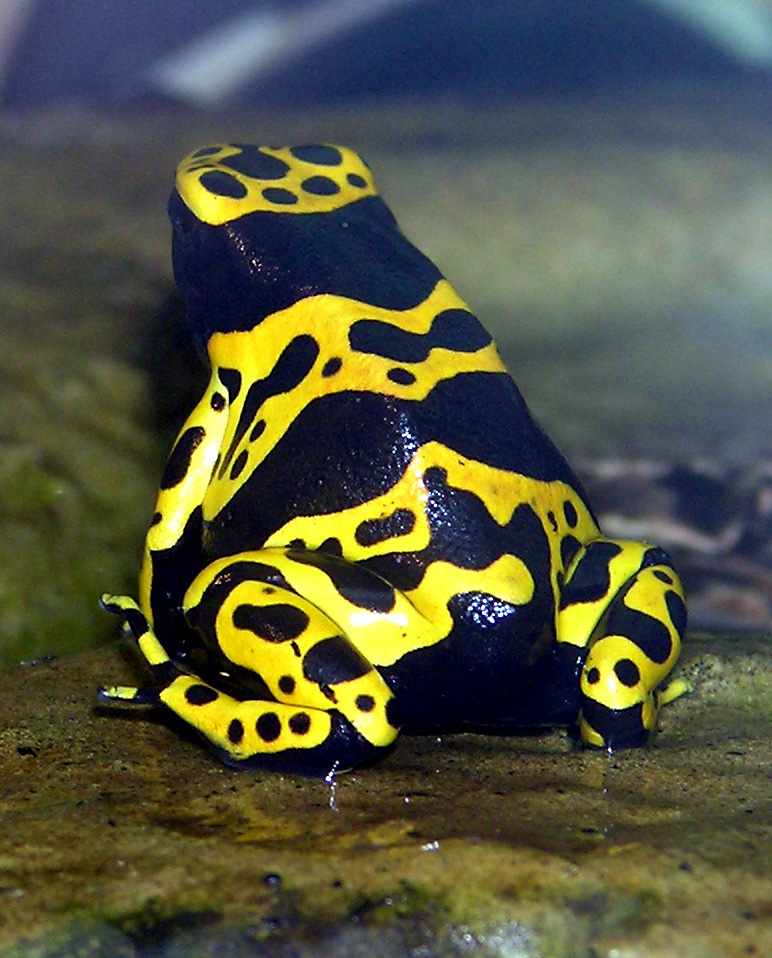
A hardy, boldly striped yellow-and-black dart frog that is one of the best beginner species and stays visible and active. Males call with a loud, buzzy trill that can be surprisingly audible in a quiet room, and like all darts it must not be handled.
⚡Ownership snapshot
👍 Pros
- Hardy and forgiving — an excellent first dart frog
- Very group-tolerant for a lively communal display
- Bold and diurnal, out in the open all day
- Captive-bred stock is non-toxic and long-lived
👎 Cons
- Not for handling or interaction
- Needs constant cultured live feeders
- Sensitive to overheating and poor water quality
- Meaningful upfront vivarium setup and effort
🧭Temperament & needs
🧠Personality & temperament
The bumblebee, or yellow-banded, dart frog is one of the boldest and most personable-looking species, its striking black-and-yellow warning bands on constant display as it forages in the open. It is hardy, confident and famously tolerant of groupmates, which makes a lively communal display. Like all darts it is a watch-only animal with no interest in its keeper, but its charisma and visibility make it a favorite.
📜Origin & background
Dendrobates leucomelas is native to northern South America — chiefly Venezuela, extending into Guyana, eastern Colombia and northern Brazil. It inhabits humid lowland rainforest floor, often near seasonal water and rocky, leaf-littered ground.
🏃Exercise & enrichment
An active, exploratory forager, it uses the whole enclosure — ground-level leaf litter, cork tubes, and low branches and broad leaves for the occasional climb. Keep it busy with scattered live prey and a complex, planted terrain rather than any direct interaction.
✂️Grooming & hygiene
Husbandry means daily misting for humidity, spot-cleaning waste and mold, and relying on a springtail and isopod cleanup crew in a bioactive vivarium. The frog sheds and eats its skin unaided, so there is no molt care beyond keeping conditions clean and stable with dechlorinated water.
🍽️Diet & feeding
The staple is supplement-dusted flightless fruit flies (melanogaster and larger hydei), plus springtails and occasional pinhead crickets or bean beetles for variety. Feed adults every one to two days and froglets daily, dusting every feeding with calcium and a vitamin-A/D3 supplement.
🏠Housing & environment
House a small group in a bioactive, planted glass vivarium of about 18-29 gallons with a drainage layer, ABG-type substrate, deep leaf litter and live plants. Hold temperatures around 22-26°C (72-79°F), avoiding sustained heat above ~28°C, with humidity of 80-100% from misting and a sealed lid. Provide a shallow water dish and use RO or dechlorinated water throughout.
🩺Health & lifespan
Leucomelas is hardy but still dies from overheating, so temperature control is critical. Nutritional disease (spindly-leg, short-tongue syndrome, metabolic bone disease) from poor supplementation, plus chytrid fungus, bacterial infection and edema/bloat, are the main concerns, along with sensitivity to chlorine and dirty water. Well kept, it commonly lives 10-20 years.
🎓Training & socialization
This is a hands-off display frog — its permeable skin readily absorbs oils, salts and residues, so handle only for essential moves or vet checks using clean, wet gloves. 'Acclimation' simply means letting a new frog settle and feed reliably before you consider it established.
💰Cost of ownership
The bulk of the cost is the initial planted bioactive vivarium with lights, misting and cleanup crew, plus the captive-bred frogs, which are affordable and widely available. Running costs are modest and ongoing: fruit fly and springtail cultures, supplements, RO/dechlorinated water and electricity.
💚Who it's good for
Beginners and families wanting a hardy, active, easy-to-see display frog.
❓Frequently asked questions
Is the bumblebee dart frog a good beginner species?
Yes — it is one of the hardiest and most forgiving darts, tolerant of minor temperature and humidity swings, bold enough to feed in the open, and readily available captive-bred.
Can they be kept in a group?
Absolutely; leucomelas is among the most social and group-tolerant dart frogs and often does best as a small colony in a suitably sized, well-planted enclosure.
Mine buried itself and stopped feeding — is it sick?
Not necessarily. This species will aestivate, hiding under litter and slowing down during dry or cool spells; boost humidity and warmth gently and it usually resumes normal activity.
🔎People also ask
Similar pets


Similar pets from other species


Sources: American Kennel Club / breed standards · The Cat Fanciers' Association · PDSA / RSPCA pet care guides · Spruce Pets care references