🐜 Ant Colony Care: The Complete Guide
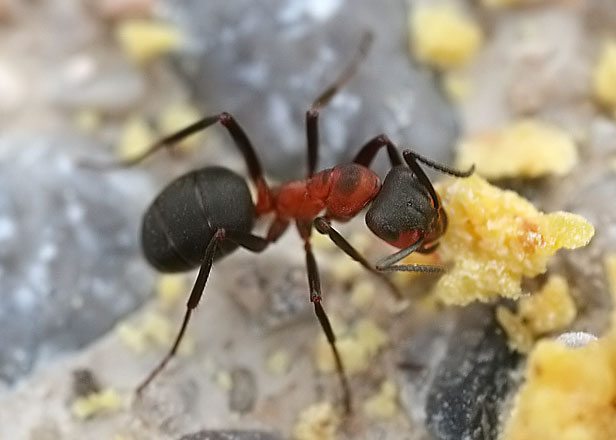
Keeping an ant colony (the hobby is called ant-keeping, and the enclosure a formicarium) means raising a living superorganism — a single queen and her growing family of workers — rather than an individual pet. It is one of the most rewarding low-cost, low-space hobbies available, but it rewards patience above all: a colony started from a lone queen can take months to produce its first workers and a year or more to become visually impressive. This guide covers the popular beginner-to-intermediate genera — Camponotus (carpenter ants), Messor barbarus (harvester ant), Lasius niger (black garden ant), Pheidole (big-headed ants), Atta (leafcutter ants), and Formica (wood/field ants) — with honest notes on difficulty, legality, and the very real risk of escape.
1. Is an Ant colony right for you?
An ant colony is ideal if you enjoy slow, observational nature-watching and can resist the urge to constantly intervene. Unlike a dog or even a reptile, ants are not a pet you interact with directly — you watch them build, forage, and raise brood through glass. The payoff is a self-organizing miniature ecosystem that can live for years (a Lasius or Camponotus queen can survive well over a decade), but the early stage is genuinely slow: after catching or buying a founding queen, you may wait 6–10 weeks for the first tiny workers (nanitics) and several more months before the colony is large enough to be active and engaging. If you want instant activity, ant-keeping will test your patience.
Match the genus to your commitment level. Lasius niger and Messor barbarus are the classic beginner ants: hardy, forgiving of humidity swings, easy to feed, and slow enough to manage. Camponotus (carpenter ants) are beautiful and large but grow slowly and hibernate. Formica are fast, active, and fascinating but can be nervous and prone to escape. Pheidole (big-headed ants) are prolific and fast-growing with charming soldier castes, but that speed means they can outgrow a small setup and overwhelm a careless keeper. Atta (leafcutters) are the advanced tier — they farm a living fungus, require a constant supply of fresh leaves, high humidity, and a multi-chamber setup, and are unsuitable for a first colony.
Be realistic about the whole household, too. Ants are small enough to escape through gaps you would never notice, so a formicarium demands a genuine escape-prevention system (barriers, tight lids, an outer container). Some species bite or sting: Formica and many Camponotus spray or bite and can flick formic acid, harvester ants can deliver a sharp bite, and non-native invasive species are an ecological hazard if released. If you have very young children, cannot commit to a barrier routine, or live somewhere that prohibits keeping the species you want, reconsider before buying a queen.
2. Choosing a healthy Ant colony
The single most important choice is the founding queen. A healthy queen is plump-bodied (a full gaster, the rear segment), moves deliberately rather than frantically, and — crucially — is fertile and, ideally, already mated. Wild queens are usually caught during a nuptial flight after they have mated and shed their wings; a de-alated (wingless) queen found walking on the ground shortly after a flight is your best bet. If buying, look for a seller who states the species precisely, confirms the queen is laying or already has eggs/brood/workers, and ships with a few workers when possible (a colony with workers establishes far faster than a lone founding queen). Avoid any queen that is thin, sluggish to the point of unresponsiveness, missing legs, or sold with vague 'mixed species' labeling.
Decide deliberately between captive-bred/hobby-supplied colonies and wild-caught. Buying from a reputable ant vendor gives you a correctly identified, healthy, often already-established colony and avoids the trial-and-error of catching queens, but costs more. Catching your own queen during local nuptial flights is free and deeply satisfying, but you must identify the species correctly and accept that many wild queens are unmated or fail to found a colony. Whichever route you choose, never buy a colony whose species you cannot confirm — misidentification is how invasive ants spread.
Legality is not optional and varies enormously by country and region. Many nations restrict or ban the import and keeping of non-native ant species specifically because escaped exotics (fire ants, certain Pheidole, and others) can become destructive invasives; some places require permits, and shipping live queens across borders is often illegal. Atta leafcutters in particular are prohibited or tightly controlled in many regions because of their agricultural-pest potential. Before acquiring any colony, check your local, state/provincial, and national regulations, and as a firm ethical rule keep only species native to your area unless you are certain both the law and containment allow otherwise. Never release captive ants into the wild.
3. Housing & enclosure setup
A formicarium has two parts: a nest (where the queen and brood live, kept humid and dark) and an outworld/foraging area (open, dry, where you place food and where waste is dumped). For a founding queen, you start much smaller — a simple test tube setup: a glass tube with a reservoir of water at the closed end trapped behind a cotton plug, then the queen and a second cotton plug near the opening. This gives constant humidity, darkness (cover it), and a stable microclimate, and it is where nearly every colony should begin regardless of genus. Only move the colony into a larger nest once it has 15–30+ workers and has outgrown the tube.
Match the nest to the species' humidity needs. Lasius niger and Formica prefer a moderately humid nest with a dry area they can choose; Camponotus like a drier nest with a humid corner; Messor barbarus (harvester ants) prefer a mostly dry nest with a granary chamber and only a small water source, since damp seeds mould. Atta demand consistently high humidity for their fungus garden and need a dedicated fungus chamber plus a leaf-delivery outworld. Popular nest materials include ytong/aerated concrete, plaster, and acrylic; hydration is usually via a water tower, sponge, or a channel you top up. Substrate in the outworld can be sand, sand/loam, or bare — a thin sand layer helps with grip and lets you spot activity. Provide a shallow water source (a water-soaked cotton or a small dish with a sponge so ants cannot drown).
Temperature and, above all, escape prevention are the make-or-break specifics. Most temperate species (Lasius, Formica, Camponotus, Messor) thrive at roughly 22–26 C / 72–79 C during the active season; a low-wattage heat cable or mat applied to ONE end of the nest (never the whole thing) lets ants choose their preferred zone — never cook the colony by heating uniformly. Temperate species also need a winter hibernation (diapause) at around 5–15 C for 2–3 months, typically achieved in a cool room, cellar, or wine fridge; skipping it shortens the queen's life. For escape control, coat the inner rim of the outworld with a barrier — PTFE/fluon or baby powder mixed with alcohol (talc slurry) for larger species, or mineral oil/petroleum jelly for tiny ones like Lasius and Pheidole. Seal every joint, keep lids tight, and stand the whole formicarium in an outer tray as a moat or second line of defense. Tiny species like Pheidole and Lasius are escape artists — assume any gap will be found.
4. Feeding & diet
Ants need two categories of food: carbohydrates for energy (fuel for the workers) and protein for producing brood (fuel for the queen's egg-laying). For carbohydrates, offer sugar water, honey water, or diluted maple/agave — a drop on a small dish or piece of foil, replaced before it ferments. Many keepers use hummingbird-style sugar solutions or commercial ant nectar. For protein, offer freshly killed or pre-frozen feeder insects: crickets, mealworms, roaches, flightless fruit flies, or bits of cooked (unseasoned) chicken/egg for larger colonies. Freeze wild-caught insects for a day or two first to kill parasites and pesticide-loaded prey. Feed protein most heavily when there is brood to raise.
Harvester ants (Messor barbarus) are the important exception: they are primarily granivores (seed-eaters). Their staple is a mix of small seeds — poppy, chia, dandelion, grass seeds, millet, and commercial harvester-ant seed blends — which they husk and store in a granary and process into 'ant bread.' They still appreciate the occasional insect for protein and a little sugar water, but seeds are the core diet. Atta (leafcutters) are another special case entirely: they do not eat the leaves they cut — they feed fresh, pesticide-free leaves, petals, and sometimes oats to a symbiotic fungus, and the colony eats the fungus. Leafcutter keepers must supply a steady rotation of clean foliage year-round, which is a significant, non-negotiable chore.
Quantity and hygiene matter more than variety. Feed small amounts frequently rather than large amounts rarely, and remove uneaten protein within 24–48 hours before it moults or attracts mites. A founding queen in a test tube generally needs no food until her first workers appear — she metabolizes her own wing muscles and fat to raise the first brood, and disturbing her to offer food does more harm than good (semi-claustral queens like some Camponotus and Messor are an exception and will accept a little sugar). Always keep water available, and never feed honey in an open puddle small ants can drown in — use a saturated cotton or a pad they can walk on.
5. Daily & weekly care routine
Day to day, ant-keeping is refreshingly low-effort. The core daily task is simply checking that the water reservoirs and hydration source have not run dry — a nest that dries out can kill brood or the whole colony within a day for humidity-loving species. Otherwise, a quick glance to confirm the ants look active and that nothing has escaped is enough. Resist the urge to open the nest or rearrange things; ants find disturbance stressful and a nervous colony may stop laying, ball up its brood, or attempt to abscond (move out).
Weekly, you feed and clean. Offer protein and carbohydrates on the outworld a few times a week (frequency scales with colony size and how much brood is present), then remove leftovers before they spoil. Ants keep their own nest tidy by carting refuse — dead nestmates, husks, food scraps — to a midden pile in a corner of the outworld; your job is to periodically remove that midden with tweezers or a small brush to prevent mould and mites. Top up water reservoirs, wipe condensation if it is excessive, and refresh the barrier (fluon/oil) around the outworld rim every few weeks, since it degrades and is your primary defense against escape.
Be honest about handling: you do not handle ants. This is a look-don't-touch hobby. Ants are too small and fragile to interact with, many bite or sting, and opening the enclosure invites escapes. 'Enrichment' means giving the colony things to do within the enclosure — live (pre-frozen) prey to dismantle, foraging distance to cover, natural materials like sand, small stones, cork bark, or leaves to explore and excavate, and seeds to process for harvesters. The reward of the hobby is watching natural behavior unfold, not physical contact. Also plan for absences: a healthy colony can safely be left for a week or two if water reservoirs are full and the nest is stable, which makes ants unusually low-maintenance compared with most pets.
6. Health & common problems
The most common killers in ant-keeping are environmental, not disease: dehydration and overheating. A nest that dries out, or one heated uniformly with no cool refuge, will stress or kill the colony fast — always heat only one end and always keep hydration topped up. Excess moisture is the opposite hazard: a soggy nest, spilled sugar water, or uneaten protein breeds mould and mites. Mite infestations (tiny specks crawling on ants or brood) are a frequent problem; prevent them with strict food hygiene, prompt midden removal, and avoiding overly wet substrate. Brood that turns dark, deflated, or is being eaten by the workers usually signals stress, wrong humidity, or an unmated/failing queen.
Unlike vertebrates, ants do not shed or molt as adults — molting happens only in the larval stage, and larvae need correct humidity to molt and pupate successfully; too dry and they fail to develop, too wet and they mould. Watch for warning signs at the colony level rather than the individual level: a queen that stops laying, workers clustering listlessly, brood disappearing, ants failing to take food, or repeated attempts to abscond all indicate something is wrong — most often temperature, humidity, disturbance, or contamination. For temperate species, a queen that never received proper winter diapause may lay poorly and is likely to have a shortened lifespan. A single dead worker is normal (workers live weeks to months); a rising death toll is not.
Ordinary veterinary care does not apply to ants — very few exotics vets treat invertebrates, and there are no meaningful medical treatments for a colony. Your 'treatment' is husbandry correction: fix humidity, adjust temperature, isolate and clean out mites or mould, and reduce disturbance. That said, an invertebrate-experienced exotics specialist or an entomology contact can be genuinely useful for accurate species identification, diagnosing a persistent mite or fungal problem, or confirming whether a non-laying queen is unmated versus merely stressed. If a whole colony is declining despite correct water, temperature, and food, the likeliest explanations are an unmated/infertile queen or a contamination problem — both worth a knowledgeable second opinion before you conclude the colony is failing.
7. Cost of ownership
Ant-keeping is one of the cheapest animal hobbies to start. The founding queen is often the biggest single cost, and it ranges widely: a wild-caught queen you catch yourself during a nuptial flight is free, while a purchased queen ranges from very cheap for common species (Lasius niger, Messor barbarus) up to significantly more for large or slow-growing genera (Camponotus) and much more for specialist colonies (Atta leafcutters, often the most expensive by far). Buying an established colony with workers costs more than a lone queen but saves months of waiting.
Equipment is modest. A founding setup is almost nothing — a test tube, cotton, and a small container. A proper formicarium (nest plus outworld) is a mid-range one-time purchase, more if you buy a large acrylic or ytong nest, less if you make your own. Add small costs for a heat cable or mat, a barrier product (fluon or just baby powder and oil), tweezers, and a thermometer/hygrometer. Because colonies grow, budget for one or two nest upgrades over the colony's life as it outgrows each home — this is the main recurring capital cost.
Ongoing running costs are very low. Food is inexpensive: a small supply of feeder insects, some sugar or honey, and (for harvesters) a bag of seed mix will last a long time relative to how little a colony eats. Electricity for a low-wattage heat cable is negligible. The realistic budget picture is a modest upfront outlay dominated by the queen and first nest, then trivial monthly costs — making ants dramatically cheaper to keep than nearly any vertebrate pet. The main 'cost' is time and patience rather than money, with the notable exception of Atta leafcutters, whose ongoing need for fresh clean foliage and larger, more complex setups makes them meaningfully more demanding and expensive to sustain.
8. Common beginner mistakes
1. Disturbing the colony too much. New keepers open the nest, move the test tube, and check on a founding queen constantly — this is the fastest way to make a queen eat her eggs, stop laying, or abscond. In the founding stage especially, wrap the tube in darkness and leave it alone for weeks; watch, don't fiddle.
2. Underestimating escapes and overheating. Tiny species like Lasius and Pheidole find gaps you cannot see, so skipping a barrier or leaving a lid loose leads to ants loose in the house. Equally common is heating the whole nest uniformly — always apply heat to one end only so ants can choose a cooler zone, and never assume 'warmer is better.'
3. Feeding wrong or too much. Offering only sugar and no protein starves brood production; offering only protein gives workers no energy. Leaving uneaten insects in the enclosure breeds mould and mites. And feeding harvester ants an insect-heavy diet instead of seeds, or expecting leafcutters to eat leaves directly, reflects not matching diet to genus.
4. Letting the nest dry out (or drowning the ants). Forgetting to refill water reservoirs kills humidity-dependent brood quickly, while an open dish of sugar water or honey drowns small workers. Keep hydration constant and serve liquids on a cotton pad or shallow sponge.
5. Choosing the wrong species and ignoring the law. Starting with a fast, demanding, or exotic colony (Pheidole that explode in number, or Atta that need daily fresh leaves) before mastering the basics leads to failure — begin with Lasius niger or Messor barbarus. And acquiring a non-native species without checking legality, then risking or deliberately releasing it, is both illegal in many places and ecologically harmful. Keep native species, contain them properly, and never release captive ants.
❓Frequently asked questions
How long until my ant colony has lots of ants?
Expect to be patient. Starting from a single founding queen, it typically takes 6–10 weeks for the first small workers (nanitics) to appear, and several more months before the colony numbers in the dozens and becomes visibly active. A colony that looks impressive — hundreds of workers — usually takes a year or more, and growth is slower for large genera like Camponotus and faster for prolific ones like Pheidole. Buying an established colony that already has workers is the shortcut if you don't want to wait through the slow founding phase.
Do pet ants bite or sting, and are they dangerous?
Many do, though most keeper-friendly species are not medically dangerous to a healthy adult. Formica and many Camponotus can bite and spray formic acid, harvester ants (Messor) can deliver a sharp bite, and some genera worldwide sting. Reactions are usually minor for the common hobby species, but people with insect-sting allergies should be cautious, and this is a look-don't-touch hobby regardless — you observe ants through glass rather than handle them. The bigger real-world risk is not venom but escape and, with non-native species, ecological harm if they get loose or are released.
Do I need to hibernate my ants?
For temperate species — Lasius, Formica, Camponotus, and Messor barbarus — yes. These ants have an annual dormancy (diapause) and need a cool period of roughly 5–15 C for about 2–3 months in winter, achieved in a cool room, cellar, or a wine fridge. Skipping hibernation stresses the colony and shortens the queen's lifespan. Tropical species such as Atta leafcutters do not hibernate and instead need consistently warm, humid conditions year-round. Always research your specific species' native climate.
Is it legal to keep any ant species I want?
No — legality varies a lot by country and region, and it matters. Many places restrict or ban keeping and importing non-native ants because escaped exotics can become destructive invasive species; some require permits, and shipping live queens across borders is frequently illegal. Atta leafcutters in particular are prohibited or tightly controlled in many regions. Check your local, regional, and national rules before acquiring any colony, strongly prefer species native to your area, contain them securely, and never release captive ants into the wild.
Browse these pets


Sources: American Kennel Club / breed standards · The Cat Fanciers' Association · PDSA / RSPCA pet care guides · Spruce Pets care references